One of the defining stories of the 2026 World Cup has been how the traditional gap between football’s elite nations and emerging football countries has continued to shrink. While the biggest names still possess greater squad depth and experience, many of the smaller nations have shown that tactical discipline, athleticism and belief can make them genuine threats.

The knockout stage has already produced several remarkable results. Paraguay stunned four-time champions Germany by eliminating them on penalties after a hard-fought draw, while Morocco repeated their reputation as giant-killers by knocking out the Netherlands, another tournament favourite. These results underline that established powers can no longer expect comfortable victories in the knockout rounds. (Deccan Herald)
Perhaps the most inspiring story has been Cape Verde. One of the smallest nations ever to qualify for a World Cup, Cape Verde progressed beyond the group stage in their tournament debut and earned a last-32 meeting with Argentina. Their achievement demonstrates that intelligent coaching, defensive organisation and outstanding team spirit can compensate for a much smaller player pool. (Al Jazeera)
Several other nations have also exceeded expectations:
- Canada reached the Round of 16 after defeating South Africa and have continued the strong upward trajectory of North American football.
- Norway overcame Ivory Coast to keep alive hopes of a deep tournament run.
- DR Congo pushed England (https://england-2026.com/) throughout their Round of 32 tie, taking the lead before eventually losing 2-1.
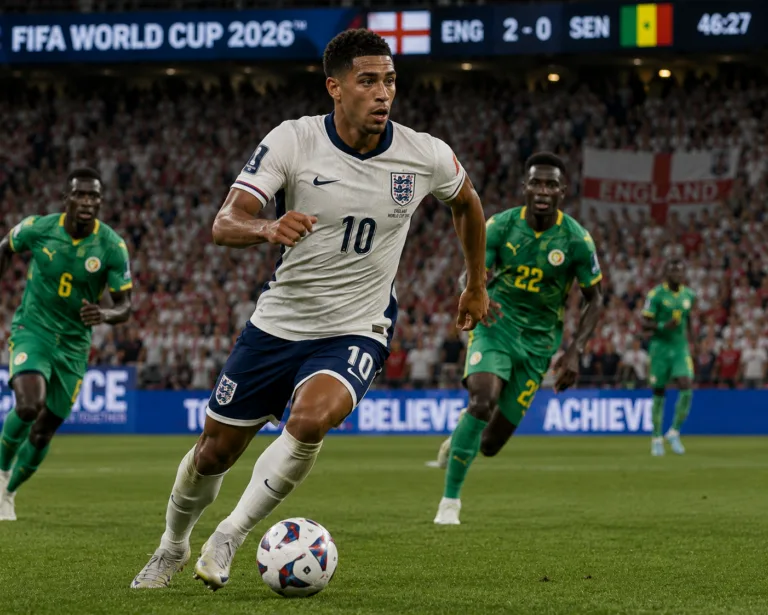
- Senegal led Belgium (https://belgium-2026.com) 2-0 before narrowly missing out after extra time, showing just how fine the margins have become. (Bavarian Football Works)
Several tactical trends explain why these nations are competing so effectively.
First, defensive organisation has never been better. Many of the so-called smaller teams defend in compact 4-4-2 or 5-4-1 systems, leaving very little space between midfield and defence. Rather than chasing possession, they force the bigger teams into wide areas where chances are harder to create.
Secondly, transitions are becoming increasingly dangerous. Teams such as Morocco, Paraguay and Cape Verde have shown they can defend patiently before breaking forward with speed whenever possession is won. Against attacking giants that commit numbers forward, these counter-attacks have proved highly effective.
Physical preparation has also improved enormously. The athletic difference that once existed between elite European or South American sides and developing football nations has largely disappeared. Many players from smaller countries now compete every week in Europe’s top leagues, bringing valuable experience into their national teams.
The expanded 48-team format has also played a part. More nations gained the opportunity to qualify, increasing confidence and investment in football programmes across Africa, Asia, CONCACAF and smaller South American nations. Once in the tournament, these teams have demonstrated they belong rather than simply making up the numbers.
For the tournament favourites, the message is clear. No match can be taken lightly. Traditional powers such as Germany and the Netherlands have already paid the price for failing to convert chances against well-organised opponents, while England, Belgium and Brazil all had to work extremely hard to avoid similar upsets. (Deccan Herald)
The greatest winners may ultimately be the fans. Every knockout match now feels genuinely competitive, with the possibility of another surprise never far away. The success of teams like Morocco, Paraguay and Cape Verde has reinforced one of football’s enduring attractions: on the biggest stage, disciplined teamwork, tactical intelligence and unwavering belief can still overcome reputation and history.