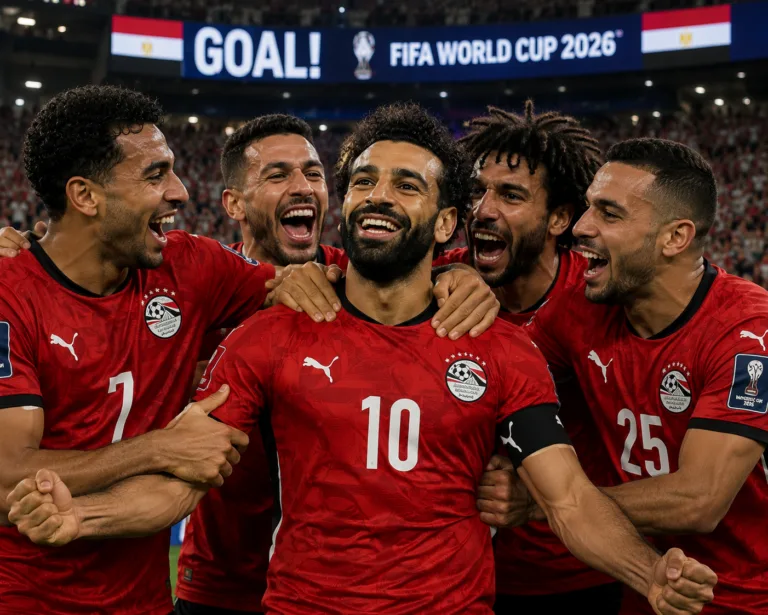
The FIFA World Cup is famous for producing unforgettable surprises. While football fans naturally focus on traditional giants such as Brazil, Germany, Argentina, France, Spain, England, and Portugal, history has repeatedly shown that unexpected teams can emerge and capture the imagination of supporters worldwide.
Every tournament creates its own Cinderella story. From Croatia’s remarkable run to the final in 2018 to Morocco’s historic journey to the semi-finals in 2022, the World Cup consistently proves that anything is possible when national pride, tactical discipline, and momentum come together.
As the FIFA World Cup 2026 progresses, several nations appear capable of becoming this tournament’s biggest surprise package. While they may not be considered favorites to lift the trophy, these teams possess the quality, organization, and belief necessary to challenge football’s traditional powers.
Why Dark Horses Matter at the World Cup
One of the reasons the FIFA World Cup remains the most exciting sporting event on the planet is its unpredictability.
Unlike domestic leagues, where the strongest teams usually rise to the top over the course of a long season, World Cup football is often decided by moments. A brilliant individual performance, a tactical masterclass, or even a single goal can completely change a nation’s destiny.
Tournament football rewards teams that are organized, disciplined, and mentally strong. A nation does not necessarily need the world’s most expensive squad to succeed. Instead, it needs a group of players willing to work together toward a common goal.
The expanded 48-team format of the 2026 World Cup has increased the possibility of surprises. More teams mean more opportunities for emerging football nations to gain experience, build momentum, and challenge the established order.
This environment is ideal for dark horses.

Morocco: Looking to Continue Making History
Few nations have done more to raise expectations in recent years than Morocco.
The African side stunned the football world during the 2022 World Cup by becoming the first African nation ever to reach the semi-finals. Their success was not based on luck. It was built on exceptional organization, defensive discipline, and relentless determination.
Morocco demonstrated that modern football allows well-coached teams to compete with anyone. Their ability to frustrate elite opponents while remaining dangerous on the counterattack made them one of the most difficult teams to face.
Heading into the 2026 World Cup, Morocco carries valuable experience. Many members of their squad have already competed in high-pressure knockout matches and understand what it takes to succeed on the biggest stage.
If they can recreate the spirit and confidence that defined their previous World Cup campaign, another deep run is entirely possible.
Colombia: A Team Nobody Wants to Face
Colombia has often been viewed as a sleeping giant of international football.
The South American nation consistently produces technically gifted players capable of competing in Europe’s strongest leagues. Their style combines creativity, attacking flair, and passion, making them a dangerous opponent for any team.
Historically, Colombia has produced memorable World Cup moments and exciting football. What has often prevented them from advancing further has been consistency rather than talent.
The 2026 World Cup offers another opportunity for Colombia to demonstrate its quality. If they can navigate the group stage successfully and build momentum, they possess enough attacking talent to cause problems for even the strongest nations.
Tournament football frequently rewards teams capable of scoring goals at crucial moments, and Colombia has the attacking weapons necessary to do exactly that.
Norway: A New Generation Ready to Shine
Norway may not traditionally be considered among football’s elite nations, but their current generation has attracted significant attention.
The country’s football development has improved dramatically in recent years, producing talented players capable of competing at the highest level of European football.
What makes Norway particularly dangerous is their balance. They possess physical strength, technical ability, and growing international experience. Their players are accustomed to high-pressure environments and understand how to compete against elite opposition.
For many supporters, Norway represents one of the most intriguing dark horse candidates of the tournament.
Because expectations remain relatively modest compared to football’s traditional powers, Norway can approach matches with freedom and confidence. This mentality often benefits teams during major tournaments.
If they gain momentum early, they could become one of the competition’s most difficult opponents.
Senegal’s Potential to Surprise
African football continues to grow stronger, and Senegal remains one of the continent’s most respected representatives.
The nation has consistently demonstrated an ability to compete against elite opposition. Their players combine athleticism, tactical awareness, and determination, making them extremely difficult to break down.
Senegal’s success often comes from collective effort rather than individual brilliance. Every player understands their role, and the team functions as a cohesive unit.
This type of structure is invaluable during World Cup competition.
When knockout matches become tense and opportunities are limited, organized teams frequently outperform more talented opponents. Senegal has repeatedly shown that they possess the discipline required to thrive in these situations.
Why the Expanded Tournament Helps Underdogs
The expansion to 48 teams has fundamentally changed the nature of the World Cup.
More nations now have an opportunity to participate, which increases competitive diversity and introduces new footballing styles into the tournament.
For dark horses, this creates several advantages.
First, more teams mean more pathways to the knockout stages. Nations that previously struggled to qualify can now gain valuable tournament experience.
Second, larger tournaments often create unexpected matchups. Teams may face opponents they rarely encounter, making preparation more challenging and increasing the possibility of surprises.
Finally, momentum becomes even more important. A strong start can transform confidence levels and inspire players to perform above expectations.
History has shown that once a dark horse gains belief, anything becomes possible.
The Ingredients of a Successful Dark Horse
What separates successful dark horses from teams that simply participate?
Several key factors consistently appear in surprise World Cup runs.
The first is defensive organization. Teams that remain compact and disciplined can frustrate stronger opponents and keep matches competitive.
The second is belief. Players must genuinely believe they can compete against elite nations.
Third is adaptability. Successful dark horses adjust tactically depending on their opponents and circumstances.
Finally, they often possess one or two standout players capable of producing decisive moments.
When these elements combine, remarkable things can happen.
Could We See Another Historic Run?
The beauty of the FIFA World Cup lies in its unpredictability.
Every tournament begins with favorites and outsiders, but once the matches start, reputations matter less than performances. Teams earn success through determination, preparation, and execution.
The 2026 World Cup appears perfectly positioned to produce another unforgettable Cinderella story.
Whether it is Morocco, Colombia, Norway, Senegal, or another emerging nation, there is every reason to believe a dark horse will capture headlines before the tournament concludes.
Football history suggests it is not a matter of if a surprise will happen—but when.
And when it does, millions of fans around the world will be watching.