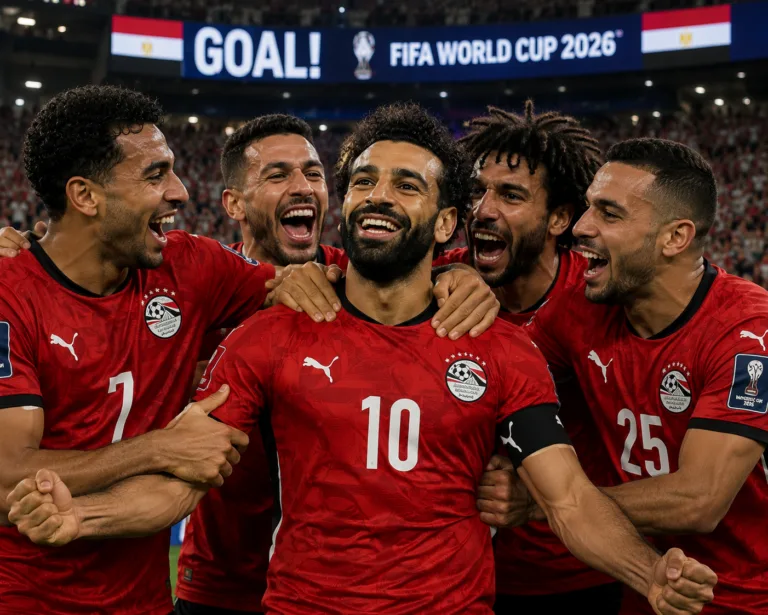
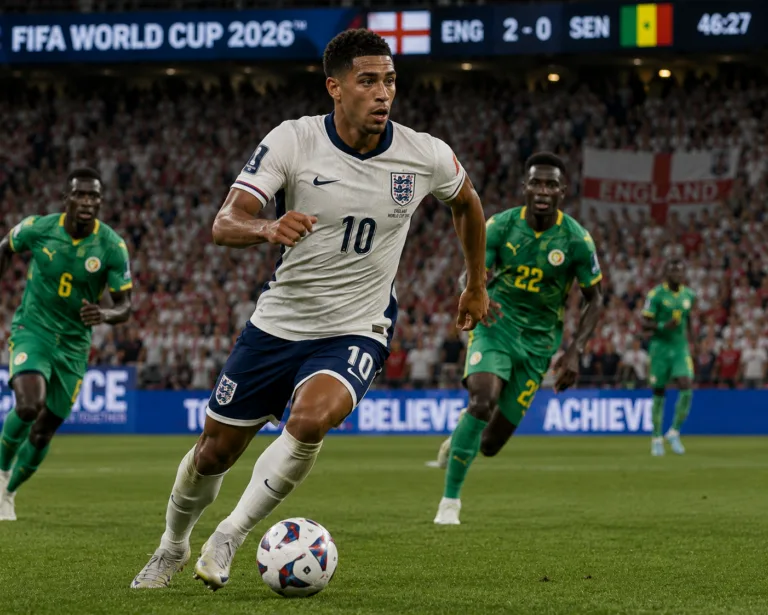
The road to the FIFA World Cup 2026 has already produced tears of joy, unforgettable celebrations and stories that remind us why football remains the world’s most beloved sport.
For the first time in history, 48 nations will compete in a FIFA World Cup, transforming the tournament into the biggest global football festival ever staged. From the football cathedrals of Mexico City to the modern arenas of the United States and Canada, the next World Cup promises to be a unique blend of tradition, passion and ambition.
As qualification campaigns concluded across the continents, one thing became clear: the competition has never been more diverse. Alongside former world champions and established football powers, several nations will experience the World Cup stage for the very first time.
FIFA World Cup 2026 by the numbers
The statistics alone illustrate the scale of the tournament:
- 48 qualified teams
- 3 host nations: Canada, Mexico and the United States
- 16 host cities
- 104 matches
- 12 groups of four teams
- More than 6 weeks of competition
The expansion from 32 to 48 teams has generated debate among supporters and pundits. Yet there is something undeniably exciting about seeing new football cultures enter the spotlight.
As a football journalist, I believe this is exactly what the World Cup should represent: not only a tournament for the elite, but a genuine celebration of the global game.
The hosts already have their tickets
Canada, Mexico and the United States automatically qualified as tournament hosts.
Each host nation enters the competition with different expectations.
Mexico: The Experienced host
Mexico continues to make World Cup history. The 2026 edition will mark the third time the country hosts matches in the competition, having previously welcomed the tournament in 1970 and 1986.
The famous Estadio Azteca has already witnessed legendary moments involving Pelé and Diego Maradona. In 2026, a new generation of football heroes will attempt to leave its own mark on football history.
United States: A nation ready for the spotlight
The United States hosted a highly successful World Cup in 1994, helping football gain significant popularity across the country.
Today, the landscape is completely different.
Soccer-specific stadiums, a growing fan culture, and increasing international influence have transformed the American football scene. The expectation is no longer simply participation; supporters now expect the team to challenge deep into the knockout rounds.
Canada: Continuing its rise
Canada’s qualification is another sign of the country’s remarkable football development.
After ending a 36-year World Cup absence in Qatar 2022, the Canadians return with greater experience and higher ambitions. Players competing in Europe’s top leagues have elevated expectations, and many observers believe Canada could become one of the tournament’s surprise packages.

The Traditional giants return
No World Cup feels complete without football’s most iconic nations.
The 2026 tournament will once again feature:
- Argentina
- Brazil
- Germany
- France
- Spain
- England
- Portugal
- Netherlands
- Belgium
- Uruguay
These nations carry enormous expectations every four years.
Argentina arrive as defending world champions and will once again attract global attention. Brazil continue their quest for a sixth world title, while France possess one of the deepest talent pools in international football.
England remain haunted by the memories of 1966, their only World Cup triumph. Every new generation is expected to end that wait, and 2026 will be no exception.
The Debutants who could capture hearts
Every World Cup creates unexpected heroes.
The expanded format has opened the door for nations that spent decades dreaming about qualification.
Among the most fascinating newcomers are:
- Jordan
- Uzbekistan
- Curaçao
- Cabo Verde
For supporters in these countries, qualification itself represents a historic achievement.
Jordan’s emergence reflects years of steady progress in Asian football. Uzbekistan finally broke through after numerous near misses. Curaçao’s success demonstrates how smaller football nations can compete with far larger countries through effective development and organization.
World Cup history teaches us never to underestimate newcomers.
Many fans still remember Senegal’s stunning victory over France in 2002 or Croatia’s incredible run to the final in 2018. Every tournament creates a surprise story, and one of these debutants could provide exactly that in North America.
Africa arrives with genuine ambition
African football enters 2026 with unprecedented confidence.
The qualified African representatives include:
- Morocco
- Senegal
- Egypt
- Ghana
- South Africa
- Tunisia
- Algeria
- Côte d’Ivoire
- Congo DR
- Cabo Verde
Morocco’s extraordinary journey to the semi-finals in Qatar changed perceptions worldwide.
For decades, African teams were considered dangerous outsiders. Today, they are viewed as genuine contenders capable of defeating any opponent.
Senegal possess experience and athleticism. Egypt will rely heavily on Mohamed Salah’s leadership. Côte d’Ivoire arrive after recent continental success, while Ghana and South Africa bring rich World Cup traditions.
The continent no longer dreams of merely participating. It dreams of reaching the final.
Europe brings strength in numbers
Europe remains the most heavily represented confederation.
Qualified nations include:
- England
- France
- Germany
- Spain
- Portugal
- Belgium
- Netherlands
- Croatia
- Switzerland
- Sweden
- Norway
- Scotland
- Austria
- Bosnia and Herzegovina
- Czechia
- Türkiye
One particularly interesting storyline involves Norway.
The presence of Erling Haaland and Martin Ødegaard has generated enormous excitement among football fans. Their return to the World Cup gives neutrals another reason to watch closely.
Croatia, meanwhile, continue to outperform expectations on the biggest stage. Despite a relatively small population, they have become one of international football’s most consistent tournament performers.
The Groups already promise drama
The group-stage draw has produced several intriguing matchups.
Some groups appear balanced, while others contain clear favourites.
Group C, featuring Brazil, Morocco, Haiti and Scotland, offers an attractive blend of styles and football traditions.
Group I brings together France, Senegal, Iraq and Norway, creating one of the most unpredictable groups in the competition.
Group L, with England, Croatia, Ghana and Panama, could become one of the tournament’s most competitive sections.
As football supporters know all too well, group-stage predictions rarely survive the opening week.
That uncertainty is exactly what makes the World Cup special.
Why this world cup feels different
There is a sense that football is entering a new era.
The expanded format brings greater representation. More nations have earned the opportunity to compete on the world’s biggest sporting stage. New stories will emerge, new heroes will be created, and entire generations of supporters will experience moments they will never forget.
From the giants chasing another title to the newcomers writing the first chapter of their World Cup journey, the FIFA World Cup 2026 already feels unique.
The qualified teams have secured their place.
Now comes the difficult part.
Turning qualification into glory.